Tutorials

Tutorials
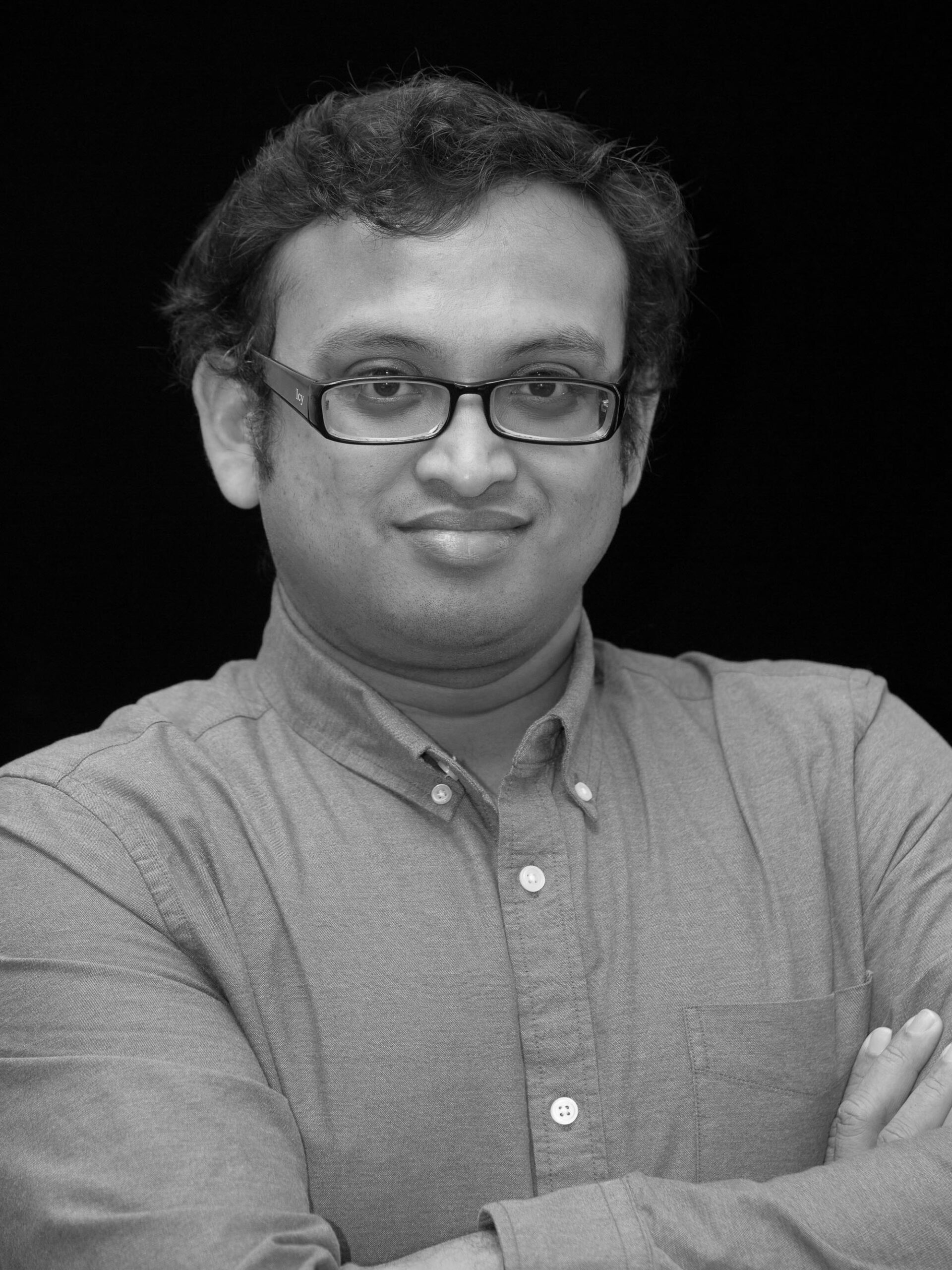
Prof. Avishek Nag , School of Computer Science, University College Dublin (UCD), Ireland, IEEE Senior Member
Title: Quantum for Networks, Networks for Quantum: An Optimisation View
Abstract: Quantum key distribution (QKD) is already deployed in metro and backbone networks, and quantum computers will need networks to scale beyond a single processor. Both trends turn quantum technology into a networking problem. This tutorial looks at that problem through network optimisation. Quantum resources look familiar but break classical assumptions. Secret keys are consumed when used and can be stored in pools. Entangled pairs lose fidelity while they wait in memory, and they cannot be copied. Quantum signals are easily drowned by noise from classical light in the same fibre. The first part of the tutorial covers quantum for networks: key provisioning, routing under partial trust, and satellite QKD for integrated ground-air-space networks, including channel modelling and digital-twin-assisted control. The second part covers networks for quantum: joint routing, wavelength and power allocation so that quantum and classical traffic can share a fibre, and entanglement scheduling in memory-limited quantum networks that link modular quantum computers. Each topic is framed as a resource allocation problem with its decisions, constraints and central tradeoff, drawing on results from our recent work. The tutorial closes with open problems for the meta-networking community.
Bio: Avishek Nag is an Associate Professor in the School of Computer Science at University College Dublin (UCD), Ireland. He received the BE (Honours) degree from Jadavpur University, India, in 2005, the MTech degree from the Indian Institute of Technology Kharagpur, India, in 2007, and the PhD degree from the University of California, Davis, USA, in 2012. He joined UCD in 2017. His research covers optimisation of wired and wireless networks, network reliability, software-defined networking and network virtualisation, machine learning for networks, and quantum communication. In quantum networking, his work spans resource allocation in QKD-secured optical networks, coexistence of quantum and classical signals in shared fibre, satellite quantum channel modelling, and entanglement distribution. He has published over 100 papers in journals, conference proceedings and book chapters, and was a co-investigator on the Ireland QCI project. He is a Senior Member of the IEEE.
Mohammed Al-Mhiqani, PhD, FHEA , Senior Lecturer in Cyber Security, School of Computing and Engineering, University of Huddersfield, UK
Title: The AI Arms Race in Railway Cybersecurity: Adversarial LLMs, Generative Threats, and Autonomous Defence
Abstract: Artificial intelligence is reshaping railway cybersecurity by accelerating an arms race between adversarial applications and autonomous defence systems. The increasing interconnection of railway signalling, operational technology, communications, and control platforms creates new opportunities for AI-enabled attacks to generate complex cyber-physical threats, exploit system vulnerabilities, and evade conventional security measures. In parallel, large language models (LLMs), generative AI, and intelligent agents can support threat modelling, security data analysis, anomaly detection, incident response, and adaptive defence. This tutorial explores the application of artificial intelligence within a controlled railway cybersecurity research environment. The session covers railway-system simulation, operational technology, security monitoring, and AI-assisted threat and defence components. The tutorial also discusses controlled evaluations that compare cybersecurity approaches and assess their effectiveness using relevant technical and operational measures. Finally, the session outlines open research directions at the intersection of artificial intelligence, cyber-physical systems, and railway security, providing insights into how future intelligent transportation systems could benefit from trustworthy and resilient AI-driven cyber defence.
Bio: Mohammed Al-Mhiqani, PhD, FHEA, is a Senior Lecturer in Cyber Security in the School of Computing and Engineering at the University of Huddersfield, UK. Before joining Huddersfield, he was a Research Associate at Keele University, where he contributed to two cybersecurity projects within the EPSRC-funded PETRAS National Centre of Excellence for IoT Systems Cybersecurity. His research lies at the intersection of cybersecurity and artificial intelligence, with a particular focus on the security and resilience of cyber-physical systems, including railway and transportation systems, as well as insider threat detection and socio-technical security. His work explores the use of AI and machine learning to detect and mitigate complex cyber threats affecting critical infrastructure and safety-critical systems. He has contributed to interdisciplinary and international research collaborations addressing emerging cybersecurity challenges across these domains.