Keynote Speech

Keynote Speech

Prof. Mohsen Guizani, Mohamed Bin Zayed University of Artificial Intelligence (MBZUAI), Abu Dhabi, UAE, IEEE Fellow
Title: Federated Learning for Intelligent Autonomous IoT Systems in Smart City
Abstract: To meet the diverse requirements for intelligent autonomous IoT systems and ensure privacy, the concept of Federated Learning (FL) has been proposed and widely adopted. Combining edge computing, security, and machine learning technologies, FL enables efficient and privacy-preserving smart autonomous systems. These smart services rely on optimized computation and communication resources. In this keynote, Prof. Guizani will showcase his research activities contributing to these efforts and discuss potential solutions that leverage FL models for intelligent IoT systems in smart cities.
Prof. Guizani has received numerous prestigious awards, including the 2015 IEEE ComSoc Best Survey Paper Award, the 2021 ComSoc Best Journal Paper Award, and five Best Paper Awards from ICC and Globecom conferences. He is the author of 11 books, over 1,000 publications, and several US patents. He also received the IEEE WTC Recognition Award (2017), AdHoc TC Recognition Award (2018), and CISTC Award (2019). He served as Editor-in-Chief of IEEE Network and currently serves on the editorial boards of several IEEE Transactions and Magazines. He was the Chair of IEEE ComSoc’s Wireless Technical Committee and TAOS Technical Committee, and he is currently an IEEE ComSoc Distinguished Lecturer.

Prof. Yusheng Ji, National Institute of Informatics (NII), Tokyo, Japan, IEEE Fellow
Title: Feedback-Free Transmission and Resource Management in Space-Air-Ground Integrated Networks
Abstract: The Space-Air-Ground Integrated Network (SAGIN) has emerged as one of the key technologies driving the evolution toward 6G, enabling seamless integration of terrestrial, aerial, and satellite communications. In this talk, Prof. Ji will first provide an overview of the 3GPP Non-Terrestrial Network (NTN) evolution and its roadmap toward global standardization. As a case study, she will introduce the design of feedback-free transmission and resource management mechanisms in a SAGIN setting based on the Fully-Decoupled Radio Access Network (FD-RAN) architecture. Finally, she will discuss future research directions and challenges in realizing space-air-ground convergence for next-generation networks.
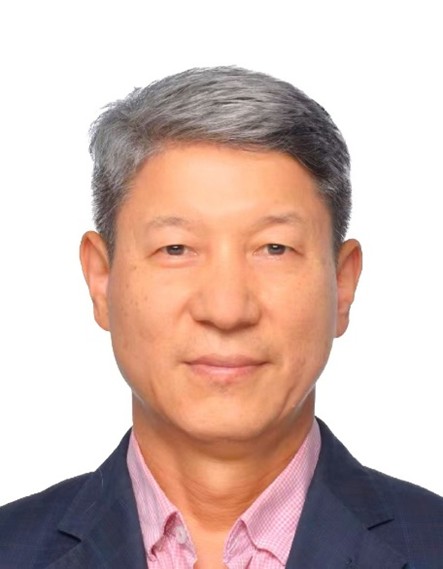
Prof. Zhisheng Niu, Tsinghua University (THU), Beijing, China, IEEE Fellow, IEICE Fellow
Title: Mobility-Enhanced Edge inTelligence (MEET) for Smart and Green 6G Networks
Abstract: Edge intelligence is an emerging paradigm for real-time training and inference at the wireless edge, thus enabling mission-critical and smart applications. Accordingly, base stations (BSs) and edge servers (ESs) need to be densely deployed, leading to huge deployment and operation costs — in particular, energy costs. In this talk, Prof. Niu proposes a new framework called Mobility-Enhanced Edge inTelligence (MEET), which exploits the sensing, communication, computing, and self-powering capabilities of intelligent connected vehicles for smart and green 6G networks. Specifically, operators can incorporate infrastructural vehicles as movable BSs or ESs, and schedule them flexibly to align with communication and computation traffic fluctuations. Meanwhile, the remaining compute resources of opportunistic vehicles are utilized for edge training and inference, so that mobility further enhances edge intelligence by bringing additional computing resources, communication opportunities, and diversified data. In this way, deployment and operational costs are distributed across the vast network of autonomous vehicles, realizing edge intelligence in a cost-effective and sustainable manner. Furthermore, these vehicles can be flexibly charged or powered by renewable energy, reducing grid peak power demand and overall electricity costs.

Prof. Junshan Zhang, University of California, Davis (UC Davis), California, USA, IEEE Fellow, NAI Fellow
Title: Smart IoT in GenAI Era — A World Model Perspective
Abstract: Generative AI is redefining smart IoT ecosystems by embedding reasoning and intelligent decision-making capabilities directly into physical devices and systems. Through embodied intelligence, IoT devices are evolving from passive data collectors into active agents capable of predicting physical interactions and dynamically adapting to environmental changes, user behaviors, and system dynamics. In this talk, Prof. Zhang will present his recent research on world-model-based autonomous driving (AD) as a compelling example of this transformation. By leveraging the ability to extrapolate and anticipate outcomes in previously unseen situations, world-model-based agents embody the generative and predictive strengths of AI, making them particularly adept at tasks that demand foresight and planning. Their self-supervised learning and proactive decision-making capabilities enable autonomous systems to go beyond reactive control, reasoning instead about the future. He will also introduce CarDreamer, an open-source reinforcement learning platform that integrates world models with CARLA to advance research in autonomous driving. In summary, Prof. Zhang envisions that smart IoT systems will evolve into an “Internet of Agents” — a connected ecosystem of intelligent, adaptive, and proactive entities shaping the physical world through generative intelligence.